

Flow Chemistry Masterclass for Chemical Research and Academics
Overview
Chemists have always been searching for ways to simplify, improve and automate synthetic protocols by using polymer-assisted solution-phase synthesis, microwave-assisted organic synthesis, micro reactors, flow chemistry and green chemistry etc. Over the last few years, within the pharmaceutical industry there has been growing interest in continuous processing as an alternative to traditional batch processing. This involves manufacturing processes ranging from drug substance to drug product, and includes unit operations such as chemical reactions, extractions, crystallization, and wet granulation etc. Certain processes switching to continuous processes may offer cost savings, greater flexibility in scale-up and access to a wider range of reaction conditions when compared to the conventional batch process. By introducing continuous crystallization processes for the active pharmaceutical ingredient (API) there is a potential to remove batch to batch variations and to achieve greater control over the particle properties leading to the opportunity to remove subsequent unit operations such as milling or micronization.
Traditional academic courses in Chemistry, Pharmaceutical Chemistry and Chemical Engineering lack Flow Chemistry in curriculum but industry is now fast adopting Flow Chemistry in commercial synthesis and research. This is because the movement of synthetic chemistry from a traditional batch format (e.g., round-bottom flask or kettle reactor) to a flowed platform offers many advantages. Firstly, in smaller reaction systems, the chemical transformation itself gets improved with respect to mass and heat transfer leading to enhanced kinetics and cleaner product mixtures with fewer byproducts. The latter benefits are significantly affected by the introduction of both a space and time element to the reaction process. This has been shown not only for small molecules and single reaction synthesis but also for multi-step transformations to produce natural products entirely by flow.
Secondly, there are several aspects, mostly economical, why a process can be run more efficiently in a continuous than a batch process. In the light of a sustainable production, continuous processes show advantages regarding use of energy, solvents and solvent recycling, creation of waste and waste-water, and tend to consume less working hours and thus less exposure of staff to chemicals through automation. In addition, safety is also an important driver for continuous processes. Thus, the advantages of flow technology are currently very clear as opposed to conventional batch methods. Above all and most strikingly with special relevance for pharmaceutical’s time-to-market needs, flow processing has the important advantage of the ease with which reaction conditions can be scaled and that too without the need for reoptimization through the operation of multiple systems in parallel or other techniques. Continuous flow reactors for drug discovery have also been reported as a tool used in pharmaceutical companies to increase the numbers of compounds synthesized and evaluate biological activity faster, as well as use in industrial production.
Since these advantages of Flow Chemistry are related to quality, safety/processability, sustainability/economics, getting accustomed to this technology will certainly be highly advantageous both for faculty and researchers in the field of Chemistry, Chemical Engineering, Pharmaceutical/Medicinal Chemistry, Natural Products and Drug Discovery. This will open new frontiers for research, improve industry-institute partnerships, equip researchers with new technology which will certainly improve their industry job prospects.
This masterclass has been specifically designed for Academic Scientists and Researchers to provide in-depth understanding of Flow Chemistry and its applications. This Masterclass will provide initial guidance to enable the Academic scientists to explore this new field for collaborations, research projects and to prepare their research scholars for better industry suitability. It will be held on April 29, 2022, virtually (1.00 pm to 5.00 pm) and is brought to you by the organizing team of Flow Chemistry India conferences in since 2012. Each participant will be given a certificate signed by Prof Paul Watts.
Who Should Attend
Professors, Faculty, Research Scholars, Scientists, Chemists, Chemical Engineers from Universities, Academic Research Laboratories and Academic Institutions involved in Research and Training in the field of Chemical Engineering, Chemistry, Pharmaceutical Chemistry, Medicinal Chemistry, Natural Products Chemistry, Industrial Chemistry, Process Intensification, Drug Discovery, and Nanotechnology.
Contacts
Technical Query: Ms. Pooja Sharma, M: 7696325050, Email: p.sharma@glostem.com; Ms. Anchal Kesari, M: 7696025050, Email: a.kesari@glostem.com
Participation Query: Ms. Swati Kanwar, M: 8289015050, Email: s.kanwar@glostem.com
Registration Query: Ms. Ankita Kanwar, M: 7696425050, Email: ankita@glostem.com, Ms. Ayush Gupta, M: 7696225050, Email: a.gupta@glostem.com

Conference Date
29-04-2022

Conference Agenda
- Concept of Flow Chemistry & Micro-reactor Technology
- Flow Reactors & Their Applications
- Chemical Synthesis in Flow Systems
- Industry-Academia Linkage in Flow Chemistry
Upcoming Conferences





Speakers & Panelists
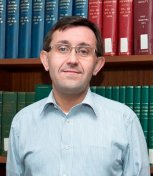
Research Chair in Microfluidic Bio/Chemical Processing,
Nelson Mandela University,
South Africa