
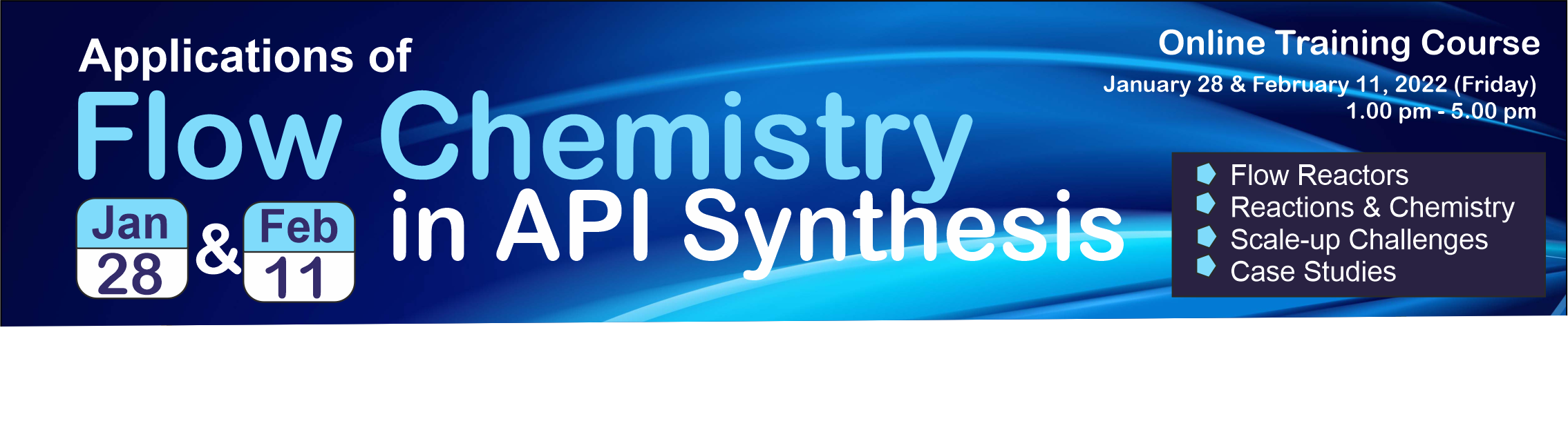
Expert Session on “Applications of Flow Chemistry in API Synthesis”
Overview
Glostem is delighted to invite you to join us at the training course on “Applications of Flow Chemistry in API Synthesis” on 11 February 2022 from 1:00 pm-5:00 pm (Indian Standard Time). The training course will be held online.
The course is designed to make participants familiar with this emerging field and improve the productivity of synthetic processes resulting in substantial Cost Saving.
This course will be valuable to the Pharma API scientists currently involved in or intending to become active in the area of Continuous Flow Synthesis. The course is intended to train the scientists in decision making as well as solving their problems related to the implementation of Flow Chemistry in API synthesis.
With time allowed for open questions and discussion, this one day will enable the audience to get to grips with most of the issues involved in Micro Reactors and Continuous Flow Production.
All participants will receive a comprehensive set of notes in pdf file consisting of the material presented in the session. Certificates will be provided to the registered participants.
Course Contents
- Introduction to micro reactors and flow chemistry
- Reactions in flow chemistry
- Scaling-up in flow
- Case Studies
- Challenges in flow chemistry
What will I Gain by Attending?
• Obtain a State of Art introduction and training in Continuous Flow Synthesis
• Understand the concepts, processes and flow continuous reactors in organic synthesis
• Become acquainted with how to solve synthetic Flow Chemistry problems
• Challenges in Flow Chemistry and their resolution
Who Should Attend?
Chemists, Scientists from Industry who are involved in research in Chemical synthesis, Bio-processing, Pharmaceutical, Fine chemical, or related synthetic topics, including Medicinal, Organic and High-throughput Chemists, in addition to scientists involved in Process Development. A basic knowledge of chemistry is required.
Contacts
Technical Query: Ms. Pooja Sharma, M: 7696325050, Email: p.sharma@glostem.com
Participation Query: Ms. Swati Kanwar, M: 8289015050, Email: s.kanwar@glostem.com
Registration Support: Ms. Ankita Kanwar, M: 7696425050, Email: ankita@glostem.com

Conference Date
11-02-2022

Conference Agenda
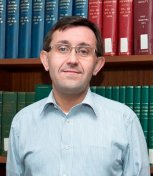
- Micro reactors and flow chemistry
- Reactions in flow chemistry
- Scale-up and Case Studies
- Challenges in flow chemistry
Upcoming Conferences


Speakers & Panelists
Research Chair in Microfluidic Bio/Chemical Processing,
Nelson Mandela University,
South Africa
Applications of Flow Chemistry in API Synthesis
Download Programme PDFFriday, 11th February 2022
| 13:00 |
Welcome address and Introduction to the Tutor |
| 13:05 |
Introduction to micro reactors and flow chemistry Paul Watts Research Chair in Microfluidic Bio/Chemical Processing, Nelson Mandela University, South Africa A brief introduction to the type of reactors used will be given, but most time will be devoted to the key concepts such asheat transfer and mixing. |
| 13:30 |
Reactions in flow chemistry Paul Watts Research Chair in Microfluidic Bio/Chemical Processing, Nelson Mandela University, South Africa This section will review in detail the reactions related to the following with respect to API synthesis like Homogeneousliquid-phase reactions, Multi-phase reactions and catalysis, High temperature chemistry, Photochemistry, Electrochemistry |
| 14:45 |
Break
|
| 15:00 |
Scaling-up in Flow Paul Watts Research Chair in Microfluidic Bio/Chemical Processing, Nelson Mandela University, South Africa Application of technology for Industrial Scale Manufacture and Scale up |
| 15:45 |
Case Studies Paul Watts Research Chair in Microfluidic Bio/Chemical Processing, Nelson Mandela University, South Africa Flow chemistry case studies with special reference to pharma industry |
| 16:15 |
Challenges in flow chemistry Paul Watts Research Chair in Microfluidic Bio/Chemical Processing, Nelson Mandela University, South Africa Challenges faced by scientists and chemists in implementing and scale up of flow chemistry in organic synthesis |
| 16:45 |
Q/A Session |
| 17:00 |
Closing Remarks and End of the Training Course |