Chat
+91 9041725050
9.30 am - 5.30 pm Mon to Sat
Request Callback
  • Login
  • Sign up
    • Home
      • About Us
      • Company Profile
    • Events
      • Microfluidics and Lab-on-a-Chip (MLC26)
      • CPEIS-2026
      • Cinnamon Seminar
      • Catalyst & Solvent Strategies
      • Flow Chemistry India 2026 (FCI26)
      • Past Events
    • Event Sciences
      • Conference Management
      • Physical Events
      • Virtual Events
      • Tech. Exhibitions
      • Networking
      • Sponsorship
      • Oral/Poster Presentation
    • Resources
      • Blogs
    • Gallery
    • Contact Us

    Microfluidics and Lab-on-a-Chip India

    Welcome to the 7th Edition of Microfluidics and Lab-on-a-Chip India, scheduled for April 30 and May 1, 2026. Building on a legacy of successful high-impact gatherings, our organizing team returns to host this premier online forum, once again uniting global pioneers, industrial leaders, and emerging scholars in the field of miniaturized systems.

    This conference serves as a critical bridge between fundamental micro-scale engineering and real-world pharmaceutical and diagnostic applications. Our scientific agenda is meticulously curated to cover the entire lifecycle of innovation. From the Foundations of Scalable Fabrication to the frontiers of Bioorganic and Synthetic Chemistry, we explore how micro-environments unlock unprecedented control over molecular interactions. Participants will dive deep into Drug Development and Delivery, featuring sessions on PK/PD modeling, Organ-on-a-Chip, and advanced nano-carriers like LNPs and liposomes.

    Beyond therapeutics, we highlight Precision Analysis and Omics, alongside breakthroughs in Biomedical Devices. Unique to this edition is our focus on The Innovation Ecosystem, a dedicated session where research scholars present disruptive work alongside startups and industry giants navigating the path from lab to market.

    Join us online this April to celebrate seven years of microfluidic excellence and shape the future of the industry. This event is brought to you by the team that organised the first "Microfluidics and Lab-on-a-Chip" event in 2013 in Bangalore and “Commercialising Microfluidic-based Devices – Prototype to Product: Issues, Bottlenecks, and Solutions” event in Hyderabad in February 2025.

    Conference Dates

    30-04-2026 to 01-05-2026

    Call for Abstracts

    Last Date of Submission: 20-04-2026
     

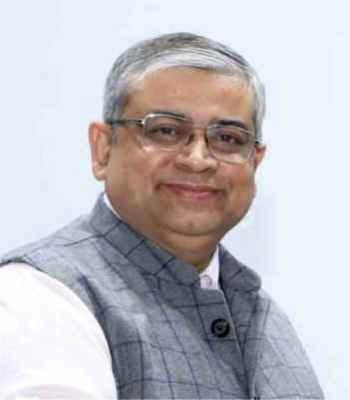
    Shantanu Bhattacharya
    Shantanu Bhattacharya
    Director - CSIR-Central Scientific Instruments Organisation, India
    Paul Watts
    Paul Watts
    Research Chair in Microfluidic Bio/Chemical Processing - Nelson Mandela University, South Africa
    Amit Asthana
    Amit Asthana
    Professor and Head, Pharmaceutical Analysis - NIPER Hyderabad, India
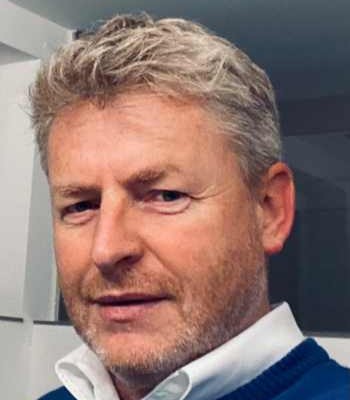
    Harald Denz
    Harald Denz
    Owner and CEO - DENZ BIO-Medical GmbH, Austria
    Gary Tarver
    Gary Tarver
    Site Head - Chemveda Life Sciences, United Kingdom
    Cloudius Ray Sagandira
    Cloudius Ray Sagandira
    Principal Researcher - Council for Scientific and Industrial Research, South Africa
    Ashis Kumar Sen
    Ashis Kumar Sen
    Professor, Mechanical Engineering - Indian Institute of Technology Madras, India
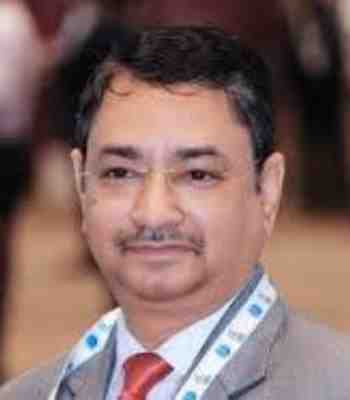
    Amit Agrawal
    Amit Agrawal
    Professor, Mechanical Engineering - Indian Institute of Technology Bombay, India
    Dhananjay Bodas
    Dhananjay Bodas
    Scientist - F, Nanobioscience Group - MACS - Agharkar Research Institute, India
    Naresh Kumar Mani
    Naresh Kumar Mani
    Professor, Biotechnology - Manipal Academy of Higher Education, Manipal, India
    Siddhartha Panda
    Siddhartha Panda
    Professor, Chemical Engineering - Indian Institute of Technology Kanpur, India
    Satish Kumar Dubey
    Satish Kumar Dubey
    Associate Professor, Mechanical Engineering - BITS Pilani, Hyderabad, India
    Tarun Kanti Bhattacharyya
    Tarun Kanti Bhattacharyya
    Institute Chair Professor - Indian Institute of Technology Kharagpur, India
    Chirasree Roy Chaudhuri
    Chirasree Roy Chaudhuri
    Associate Dean, Consultancy Professor - Indian Institute of Engineering Science and Technology, Shibpur, India
    Bhanu Prakash
    Bhanu Prakash
    Scientist E (Associate Professor) & Group Leader, Microfluidics Research Laboratory - Institute of Nano Science & Technology, India
    Suman Singh
    Suman Singh
    Scientist-F - CSIR-Central Scientific Instruments Organisation, India
    Ragavendran Sivakumarasamy
    Ragavendran Sivakumarasamy
    CEO & Founder - Point-of-Care Microfluidics Private Limited, India
    Manjunath Siddaramaiah
    Manjunath Siddaramaiah
    Diagnostics and Genomics Senior FAS - APAC - Cytiva, India
    Amit Bhat
    Amit Bhat
    Business Development Manager - Molecular Devices, India
    Devendra Rawat
    Devendra Rawat
    National Sales Manager - SIMCO Global Technology & Systems, India

    Shantanu Bhattacharya's Biography

    Shantanu Bhattacharya

    Director

    CSIR-Central Scientific Instruments Organisation

    Prof. Shantanu Bhattacharya is GVMM chair and Professor of Mechanical Engineering at Indian Institute of Technology Kanpur. He has served IIT Kanpur for around 18+ years since 2007 during which he was Head of Design interdisciplinary program between 2017-2020. Prior to this, he completed his Master of Sciences degree in Mechanical Engineering from the Texas Tech University, Lubbock, Texas, and a Ph.D. in Bioengineering from the University of Missouri, Columbia, USA. He had a postdoctoral stint at the Birck Nanotechnology Center at the Purdue University.

    Prof. Bhattacharya also served Suzuki Motors for nearly 6 years after his B. Tech. and before going for higher education.

    His main research interests have been design and development of micro and nano sensors and actuation platforms, Fabrication technologies at various scales, functional material technologies and various applications, product design and development, Innovation technology management etc.

    Dr. Bhattacharya has guided around 22 Ph.D. students and more than 30 master’s students and has authored around 120 peer reviewed international journal papers, 06 US granted patents, 15 Indian patents, 14 edited research monologues, and many conference proceedings.

    In his 18+ years of research career of IIT Kanpur Dr. Bhattacharya has created a strong research program in the domain of biomedical sensors, functional materials and micro/nano manufacturing executing around 24 thematic research projects as a Principle Investigator valued about 17 crores with funding partners like DST, DBT, BIRAC, ISRO, ADA, Boeing, Victoria Innovation Council, Australia, Indo US Science and Technology forum etc. He has also served in capacity as council member of Indo-German Science and Technology Council, DST Task Force on Water Treatment Initiative, Modernization Board Member of Artificial Limb Manufacturing company, a mini navratna enterprise under the Ministry of Social Justice, which caters to the disability sector in the country etc. Dr. Bhattacharya currently serves as a member of the national expert panel of the methane monitoring and mitigation technologies and science and heritage research initiative of the department of science and technology. He also serves as a member of the Board of Governors of Panjab Engineering College and also a research and advisory council member of the Institute of Nanoscience and Technology. Prof. Bhattacharya is also a BOG nominee in the senate of ABV-IITM Gwalior and serves as a board member of the Academy of Council of Science and Industrial Research (AcSIR). He is also member of the advisory board of CSIR-URDIP.

    He has served as the principle subject matter expert of the Swayamprabha Mechanical Engineering Channel of the Ministry or education and has himself taught almost 200+ Lecture hours in Youtube for subjects related to manufacturing processes, Manufacturing systems, Sensor and Fabrication Technologies, Design practice etc. under the National Program of Technology Enhanced Learning (NPTEL), a ministry of education initiative. Dr. Bhattacharya has many awards and accolades to his credit, which includes the Young Engineers Award from the Institute of Engineers, Young Scientist Award of the Institute for Smart Structures and System, the Best Mechanical engineering design award from the National Design Research Forum, Institution of Engineers of India, Fellowship of the royal society of Chemistry, UK, Senior Membership of IEEE, Fellowship of the Institution of Engineers (India) and Institution of Electronics and Telecommunication Engineering (IETE), respectively.

    He has also won the NASI Reliance Platinum Jubilee Award from the National Academy of Sciences, Dr. R.S. Khandpur Award of IETE, Engineer M.P. Baya National Award of the Institution of Engineers India, and Abdul Kalam Technological Innovation National fellowship from the Indian National Academy of Engineering. Prof. Shantanu Bhattacharya has also won the Navayug Ratna Award which is a very prestigious award of the Navyug School system which  was founded in 1973 by New Delhi Municipal Council (NDMC) under the auspices of Navyug School Education Society.


    Paul Watts's Biography

    Paul Watts

    Research Chair in Microfluidic Bio/Chemical Processing

    Nelson Mandela University

    Prof Paul Watts started his career as a lecturer at the University of Hull in 2002, being promoted to full professor in 2011. At the University of Hull he led the micro reactor and flow technology group. In February 2013, he moved to Nelson Mandela University to hold the distinguished position of ‘Research Chair in Microfluidic Bio/Chemical Processing’. He has published of over 120 highly cited papers. He strongly believes that scientists should conduct research that impacts society; the biggest project underway involves the local production of key drugs as the morbidity and mortality from major diseases are much more devastating in Africa than in other regions of the world.  The vision is that new technology will be used within South Africa to manufacture generic drugs; this could create jobs and a new manufacturing industry within the country. 


    Amit Asthana's Biography

    Amit Asthana

    Professor and Head, Pharmaceutical Analysis

    NIPER Hyderabad

    Dr. Amit Asthana is working as Professor and Head of the Department of Pharmaceutical Analysis at the National Institute of Pharmaceutical Education and Research (NIPER), an autonomous institute of national importance under the aegis of the Department of Pharmaceuticals, Ministry of Chemicals & Fertilizers, Government of India, New Delhi. Before joining the current position, Dr. Asthana served as Associate Professor and founder of the Department of Medical Devices. He established the entire department from scratch and headed it for nearly 5 years. 

    Before joining NIPER, he worked for ~10 years as a Senior Principal Scientist, Principal Scientist, and Ramalingaswami Fellow at the Centre for Cellular and Molecular Biology (CSIR-CCMB), Hyderabad, India. He obtained his Ph.D. in Chemistry from Barkatullah University, India, while working at the Advanced Materials and Processes Research Institute (CSIR-AMPRI).

    Dr. Asthana has 26 years of postdoctoral experience in biomaterials, micro/nanotechnology, microfluidic device design, fabrication, and characterization, hot embossing, cleanroom operations, and paper microfluidics. He has worked at Institutes and Universities of International fame, such as the University of Amsterdam, The Netherlands; the Institute Curie, France; the University of Illinois at Urbana-Champaign, USA; Chungnam National University, South Korea; and the University of Queensland, Australia.

    Dr. Asthana is a Fellow of the Telangana Academy of Sciences and has received several prestigious fellowships, including SRF (CSIR, India), Curie Fellowship (France), Brainpool Fellowship (KRF, South Korea), and the Ramalingaswami Return Fellowship from DBT, India. He has published extensively in high-impact international journals and conferences and is an inventor on multiple Indian and PCT patents, with five granted and 13 filed. His team has done two technology transfers to Innovolution Pvt Ltd and to BabyQue Pvt Ltd. 

    His research interests include biomaterials, drug delivery, micro/nanofabrication, micro/nanofluidics, digital microfluidics, a wide range of microfluidic tools for biological studies, including diagnostic applications using paper microfluidics, and non-conventional methods for fabricating microfluidic devices. Recently, Dr. Asthana received a prestigious “Fast Track Translational” research project of CSIR to develop affordable paper-based pregnancy kits for livestock, which will be introduced in the market soon.  Further, one of his students has recently initiated a startup called AfforDxTx Pvt. Ltds, dedicated to creating diabetic wound healing patches. Dr. Asthana is associated with several start-ups in India working on affordable diagnostic and medical devices as a scientific advisor, including FastSense Diagnostics (Pune, India) and Microfluidic Paper Medical Devices Pvt. Ltd (Hyderabad, India), Theronosis Life Science Pvt. Ltd. (Hyderabad, India), Technical Advisor and Stockholder in Axio Biosolutions, Pvt. Ltd (Bangalore, India).  


    Harald Denz's Biography

    Harald Denz

    Owner and CEO

    DENZ BIO-Medical GmbH

    With over 30 years of engineering expertise owner and CEO Harald Denz is supporting more than 200 satisfied customers over the last five years. With his interdisciplinary team of engineers, chemists and biologists he promotes affordable high quality prototyping and mass production for your project idea or a future product.


    Gary Tarver's Biography

    Gary Tarver

    Site Head

    Chemveda Life Sciences

    Dr. Gary Tarver completed his PhD in synthetic chemistry in 1997 working under Varinder K. Aggarwal. Over a 28 year career he has worked in large pharma, CROs and academia, leading teams in diverse areas including plate based chemistry, technology development, reaction optimisation, late stage functionalisation, biotransformation, flow, process, scale up and medicinal chemistry. Most recently Dr. Tarver has joined Chemveda Life Sciences as Site Head in Dundee, Scotland, UK.


    Cloudius Ray Sagandira's Biography

    Cloudius Ray Sagandira

    Principal Researcher

    Council for Scientific and Industrial Research

    Dr. Cloudius Ray Sagandira is a Principal Researcher at South Africa’s Council for Scientific and Industrial Research (CSIR) and an AfOx Visiting Researcher at the University of Oxford. His work focuses on integrating microfluidic and continuous flow technologies with data driven optimisation to enable scalable and sustainable manufacturing of active pharmaceutical ingredients (APIs). Trained across academia and industry at Nelson Mandela University, Chimie ParisTech, University of Basel, Novartis, and DiverChim, he has developed continuous flow processes for over 15 APIs, resulting in multiple high impact publications and patents. Passionate about strengthening pharmaceutical manufacturing in low-and middle-income countries, his research advances resilient and locally rooted solutions that improve access to essential medicines.


    Ashis Kumar Sen's Biography

    Ashis Kumar Sen

    Professor, Mechanical Engineering

    Indian Institute of Technology Madras

    Dr. Ashis K. Sen is a Professor of Mechanical Engineering at IIT Madras, specializing in micro/nanofluidics, droplet microfluidics, and acoustofluidics. He earned his BE from NIT Rourkela, ME from IISc Bangalore, and PhD from USC Columbia, and has held positions at the University of Southampton, TU Darmstadt, and OIST Japan. He has published over 150 journal papers, holds multiple patents, and has supervised 25 graduate scholars. He is a recipient of several prestigious awards, including the Vasvik Awards 2026, IITM Research Awards 2021, and Swarnajayanti Fellowship 2018.  He is a Fellow of the Institute of Physics and the Royal Society of Chemistry, and serves in leading editorial and international scientific roles.


    Amit Agrawal's Biography

    Amit Agrawal

    Professor, Mechanical Engineering

    Indian Institute of Technology Bombay

    Prof. Amit Agrawal joined the Indian Institute of Technology (IIT) Bombay in 2004 after BTech from IIT Kanpur and PhD from University of Delaware, USA. He is currently an Institute Chair Professor and J.C. Bose National Fellow in the Department of Mechanical Engineering, and a former Dean (International Relations), IIT Bombay. His research interests are in the Development of novel bio-microdevices, Micro-scale flows, Theoretical fluid mechanics, and Turbulent flows. He has supervised 100+ students (including 40+ PhDs), and mentored 15 postdocs on these and related topics. He has published more than 300 journal articles and has a dozen granted patents with his students. He has authored a well-received book entitled Microscale Flow and Heat Transfer: Mathematical Modelling and Flow Physics. The work from his lab has appeared regularly on the cover page of prestigious journals such as Journal of Fluid Mechanics, Physics of Fluids and Langmuir, and widely covered in national and international media. He has served as the Editor-in-Chief of two journals: Sadhana and Transactions of Indian National Academy of Engineering, and has been Editor of several international journals. He is an elected Fellow of all the National Engineering and Science Academies of the country (INAE, NASI, IASc, INSA). He serves as President of National Society of Fluid Mechanics and Fluid Power and was the Vice President (Publications) of Indian National Academy of Engineering. He has been interviewed by All India Radio, Cooling India magazine, and some web-series.  He also features in a book for kids ‘They Made What? They Found What?’. He has been recognized by IIT Kanpur as a Distinguished Alumnus and awarded the country’s highest scientific honor – the Shanti Swarup Bhatnagar Prize for his seminal contributions.


    Dhananjay Bodas's Biography

    Dhananjay Bodas

    Scientist - F, Nanobioscience Group

    MACS - Agharkar Research Institute

    Dhananjay Bodas is a seasoned research scientist with extensive expertise in microfabrication, microfluidics, biosensing, and nanotechnology. Currently serving as Scientist (Sc. F) at the Agharkar Research Institute (ARI), Pune, he is actively engaged in advanced research on organ-on-a-chip systems and cancer diagnostics. With over 15 years of experience, he has led and contributed to multiple high-impact, funded projects focused on rapid diagnostics, microchip-based detection systems, and nanoparticle synthesis. Dr. Bodas has played a key role as Principal and Co-Investigator in projects supported by premier agencies such as SERB, DST, ICMR, and DBT, addressing critical challenges in healthcare, including infectious diseases and oncology. His work reflects a strong blend of scientific innovation and translational research.

    He holds a Ph.D. in Electronic Science from the University of Pune and has also contributed to academia as a visiting faculty member, mentoring students in instrumentation science and technology development.


    Naresh Kumar Mani's Biography

    Naresh Kumar Mani

    Professor, Biotechnology

    Manipal Academy of Higher Education, Manipal

    Dr. Naresh Kumar Mani is a Professor in the Department of Biotechnology at the Manipal Academy of Higher Education (MAHE), Manipal, India, within the School of Civil and Chemical Engineering. His research focuses on microfluidics, biosensors, and frugal diagnostic technologies for applications in healthcare, food safety, and environmental monitoring. He leads the Microfluidics, Sensors and Diagnostics (µSenD) Laboratory and is actively involved in interdisciplinary research aimed at developing low-cost, portable analytical devices for resource-limited settings.
    Dr. Mani completed his B.Tech in Biotechnology from Anna University, India. He subsequently earned an Erasmus Mundus Master’s degree in Nano-Biophotonics, studying at institutions including École Normale Supérieure Paris-Saclay, France, and the University of Wroclaw, Poland. He obtained his PhD in Microfluidics and Nanotechnology from Sorbonne University and École Normale Supérieure, France, where his research focused on single-molecule studies and light-controlled DNA conformational dynamics. 
    Dr. Mani has authored 45+ peer-reviewed publications in reputed international journals and has filed multiple patents related to biosensing and diagnostic technologies. His research has attracted competitive funding from agencies such as DST-SERB, VGST, and industry partners, supporting the development of innovative analytical platforms. He has received several prestigious scholarships and fellowships, including the Erasmus Mundus Scholarship, French Ministry Fellowship, Sakura Fellowship, Science Academies Fellowship, and INSA Fellowship. In addition to research and teaching, he actively mentors students, collaborates with national and international research groups, and serves as a reviewer for several leading scientific journals.


    Siddhartha Panda's Biography

    Siddhartha Panda

    Professor, Chemical Engineering

    Indian Institute of Technology Kanpur

    Dr. Siddhartha Panda is a Professor of Chemical Engineering, and a participating faculty in the Materials Science Programme, and is the Coordinator (i.e. Head) of the National Centre for Flexible Electronics (NCFlexE), at IIT Kanpur. His research focuses on chemical sensors for various applications (including healthcare) and the accompanying transport, reactions, transductions, materials processing, and intelligence -- utilizing flexible printable platforms. Several of the technologies developed by his group at IIT Kanpur have been licensed to the industry. Prior to joining IIT Kanpur in 2006, he was a Staff/Advisory Engineer at the IBM Semiconductor R&D Center, New York, for over six years. He obtained a Ph.D. from the University of Houston in 1999, an M.S. from the University of Cincinnati in 1995 and a B.Tech. from IIT Kharagpur in 1992, all in Chemical Engineering.


    Satish Kumar Dubey's Biography

    Satish Kumar Dubey

    Associate Professor, Mechanical Engineering

    BITS Pilani, Hyderabad

    Prof. Satish Kumar Dubey is an Associate Professor in the Department of Mechanical Engineering and Head of the state-of-the-art Clean Room: Micro Nano Fabrication Facility at BITS Pilani, Hyderabad Campus. He is also the Principal Investigator of the MEMS Micro and Nano Electronics (MMNE) Laboratory at BITS Pilani, Hyderabad. He holds a B.E. in Mechanical Engineering from Pt. Ravi Shankar Shukla University, an M.Tech. in Thermal Engineering from Maulana Azad National Institute of Technology, Bhopal and a Ph.D. from BITS Pilani. His research interests include heat transfer modelling, microfluidics, MEMS sensors, and energy harvesting systems. Prof. Dubey has completed nine sponsored research projects funded by agencies such as DRDO, DST, SERB, and NSM, and is currently leading ten ongoing projects supported by government bodies and industries. He has authored over 120 journal papers, 40+ conference papers, and filed 32 Indian patents and 01US patent. He has delivered more than 30 invited talks across academia and industry. He currently supervises 14 Ph.D. scholars, with 07 having graduated. Additionally, he has organized. numerous technical workshops and seminars. Prof. Dubey is Co-founder and Director of Cleome Innovations Pvt. Ltd. BIRAC BIG Grant awardee start-up and Director and Scientific Advisor to Sensome Innovations Pvt. Ltd., a DPIIT-recognized start up and DST- NIDHI awardee.


    Tarun Kanti Bhattacharyya's Biography

    Tarun Kanti Bhattacharyya

    Institute Chair Professor

    Indian Institute of Technology Kharagpur

    Prof. Tarun Kanti Bhattacharyya is an Institute Chair Professor at the Indian Institute of Technology Kharagpur and a nationally and internationally respected leader in electronics, nanoelectronics, MEMS, VLSI, and sensor systems, with over 35 years of academic, research, and industrial experience spanning government laboratories, industry R&D, and premier academic institutions.

    At IIT Kharagpur, he has held several strategic leadership positions, including Professor & Head, Department of Electronics and Electrical Communication Engineering, Professor & Head, Advanced Technology Development Centre, Professor-in-Charge of the High-Performance Device Laboratory, Professor-in-Charge of the Microelectronics and MEMS Laboratory, and National Coordinator of the National MEMS Design Centre. He has been instrumental in establishing and strengthening world-class research infrastructure, including state-of-the-art VLSI and MEMS laboratories and an advanced VLSI test facility developed in collaboration with Keysight Technologies, enabling industry-grade chip, MEMS, and system validation.

    His research spans MEMS and microsystems, RF and analog VLSI, nanoelectronics, thin-film devices, nano-biosensors, and energy systems, with a strong emphasis on device-to-system translation and technology transfer. He has led and coordinated multiple multidisciplinary research groups, covering VLSI, nanobio systems, high-performance semiconductor devices (including MBE-based platforms), and MEMS-based aerospace sensors and actuators.

    Prof. Bhattacharyya has authored more than 300 peer-reviewed journal publications (conference papers intentionally excluded) and holds 17 patents (granted and filed), reflecting sustained contributions across semiconductor device physics, MEMS design, nano-biosensing, RFICs, and energy devices. His work has enabled impactful technologies in healthcare diagnostics, precision drug delivery, environmental monitoring, space micro-propulsion, and sustainable energy storage.

    He has made exceptional contributions to research mentoring, having successfully supervised 26 Ph.D. scholars and 45 M.S. (by Research) students. His students’ work has received national-level doctoral thesis awards and has translated into careers in leading academic institutions, national laboratories, multinational R&D organizations, and deep-tech startups.

    His contributions have been recognized through several prestigious honors, including the IBM Faculty Award (2012); the DST–Lockheed Martin India Innovation Growth Programme Gold Medal (2016) for microfluidic drug-delivery technology; INAE and ISSS doctoral thesis awards; and the Gandhian Young Technological Innovation (GYTI) Award for nano-engineered MEMS technologies for space applications. He has also been selected for elite international programs such as the Indo-US Frontiers of Engineering, Indo-Japan Advanced Micro/Nano Manufacturing Initiative, and the Indo-US Centre for Advanced and Futuristic Manufacturing, and is a recipient of the UNIDO (Vienna) Fellowship for international research collaboration.

    Through sustained leadership in research, infrastructure creation, international collaboration, mentoring, and translational innovation, Prof. Bhattacharyya continues to play a pivotal role in advancing India’s ecosystem in semiconductors, MEMS, nanoelectronics, and deep-tech system development.


    Chirasree Roy Chaudhuri's Biography

    Chirasree Roy Chaudhuri

    Associate Dean, Consultancy Professor

    Indian Institute of Engineering Science and Technology, Shibpur

    Prof. Chirasree Roy Chaudhuri is a senior member of IEEE and NASI (National Academy of Science, India). Currently she is working as a Professor of Electronics and Telecommunication Engineering at Indian Institute of Engineering Science and Technology, Shibpur, and also associated with Center for Healthcare Science and Technology. Her fields of interest include Biological and Chemical sensors and signal processing for healthcare. She has published over 100 papers in different international journals and conference proceedings, written seven book chapters, has three patents in the area of nanobioensors and systems. She has received the women excellence award by DST-SERB and has been featured in the book “Women in STEM: Vanguards of India@75” by Confederation of Indian Industries (CII) in 2022. Her research group has been awarded Gandhian Young Technological Innovation (GYTI) under SRISTI ((Society for Research and Initiatives for Sustainable Technologies and Institutions), India.


    Bhanu Prakash's Biography

    Bhanu Prakash

    Scientist E (Associate Professor) & Group Leader, Microfluidics Research Laboratory

    Institute of Nano Science & Technology

    Heading the microfluidics research laboratory at INST, Dr. Bhanu Prakash completed his bachelor degree in Physics from Hans Raj College of Delhi University. He pursued his master degree from IIT Kanpur. Later, he finished his PhD from Panjab University. Currently he is serving as a Scientist ‘E’ (Associate Professor) at INST Mohali. He is a member of Indian National Young Academy of Science and currently serving as a role of academic editor in the journal PLoS One. His research interest is in the area of experimental microfluidic devices for various applications under the broad umbrella of nanoscience and nanotechnology. In their pursuit of excellence, Dr. Prakash's group leverages microfluidic device simulation using COMSOL and, more recently, the application of AI/ML techniques, further enhancing their capabilities and pushing the boundaries of microfluidic research.


    Suman Singh's Biography

    Suman Singh

    Scientist-F

    CSIR-Central Scientific Instruments Organisation

    Dr. Suman Singh is a distinguished Scientist at the Central Scientific Instruments Organisation (CSIR-CSIO), Chandigarh, and Professor and Coordinator at the Academy of Scientific and Innovative Research (AcSIR), Ghaziabad, Faculty Advisor, International Student Chapter of the American Chemical Society (ACS) at CSIR-CSIO, and Advisor to the Indian Women in 3D Printing Society, Bangalore.

    With over two decades of research experience as a Materials Chemist, Dr. Singh specializes in advanced functional materials for energy, sensing and diagnostic applications, involving 3D printing and microfluidics. Her prolific contributions span high-impact publications, conference proceedings, book chapters, edited volumes, patents, copyrights, design registrations, and successful technology transfers. 

    Dr. Singh’s dedication to scientific advancement and societal impact has been honoured through accolades such as the Envirocare Green Award 2024 and ESDA Women Empowerment Award 2023, member of the National Academy of Science (NASI), Physical Science, and featured as one of “75 Women in Chemistry” in book ‘She Is’, published by Beyond Black in collaboration with the Principal Scientific Adviser, Government of India, and the Royal Society of Chemistry, Executive member of NASI-Chandigarh Chapter, Among top 2% Scientists Worldwide for 2021, 2022, and 2024, 2025, and as one of the top 2% most influential Indian scientists for 2022. Dr. Singh is an active member of esteemed organizations such as the Materials Research Society of India, Semiconductor Society of India, Vijnana Bharati, among others and editor, Journal Chemical Physics Impact & Materials Today Chemistry (Elsevier), Scientific Reports (Nature Publisher), and as Guest Editor for special issues for the Royal Society of Chemistry.


    Ragavendran Sivakumarasamy's Biography

    Ragavendran Sivakumarasamy

    CEO & Founder

    Point-of-Care Microfluidics Private Limited

    Dr. Ragavendran Sivakumarasamy is a microfluidics and semiconductor process engineer with over a decade of experience in cleanroom fabrication, nano-device integration, and advanced biosensor platform development. He is the Founder and CEO of Point-of-Care Microfluidics Pvt. Ltd., where he leads the design and development of scalable lab-on-chip systems and point-of-care diagnostic technologies for biomedical and healthcare applications, with a focus on translating research innovations into deployable solutions.

    He obtained his Ph.D. in Micro and Nanotechnology from CNRS–University of Lille, France, and has conducted advanced research at internationally renowned institutions, including CNRS (France), IMEC (Belgium), and the University of Hasselt. His research expertise encompasses PDMS-based microfluidics, nanotransistor biosensors, and nanofluidic systems, with a strong emphasis on integrating microfluidics with semiconductor technologies and enabling scalable manufacturing.

    Dr. Ragavendran has published in leading journals such as Nature Materials and Nano Letters, contributing significantly to advancements in nanoscale biosensing and lab-on-chip integration. His work includes the development of highly sensitive, membrane-free ion detection systems and precision nanofabrication techniques.

    Currently, his efforts are focused on developing cost-effective, highperformance diagnostic platforms and supporting deep-tech innovation through end-to-end product development, from concept and prototyping to validation and commercialization, thereby enabling accessible and sustainable healthcare solutions.


    Manjunath Siddaramaiah's Biography

    Manjunath Siddaramaiah

    Diagnostics and Genomics Senior FAS - APAC

    Cytiva

    Dr. Manjunath S is a distinguished scientist and expert in diagnostic kit development, cell therapy, and medical device innovation, with over 12 years of experience spanning industry, academia, and hospital-based research. He has played a pivotal role in driving business and technical advancements in the Asia-Pacific region, offering expertise in rapid POCT (Point-of-Care Testing) diagnostics, magnetic bead-based assays, and molecular diagnostics.

    Currently serving as a Senior Field Application Specialist at Cytiva, he has collaborated with over 40 industries to develop Lateral Flow Assays (LFA), RT-PCR kits, and immunoassays. His contributions include the patented development of a Magnetic Bead-based Autologous Cell Therapy Kit for Male Infertility (US20180072987A1) and multiple innovations in Flow Cytometry, ELISA, and Mass Spectrometry-based applications.

    Dr. Manjunath holds a Ph.D. in Biophysics and Fluorescence Spectroscopy from Manipal University and has been recognized with numerous fellowships and innovation awards. His research has led to several international publications and patents, contributing significantly to advancements in protein characterization and clinical diagnostics.

    Apart from his scientific endeavors, he is an Adjunct Faculty at Manipal University, actively guiding Ph.D. scholars in rapid diagnostic device development.


    Amit Bhat's Biography

    Amit Bhat

    Business Development Manager

    Molecular Devices

    Amit Bhat is a Business Development Manager in Molecular Devices with over 10 years of expertize in molecular diagnostics, cell biology and high content imaging. He has worked in R & D, where he was actively associated with new protocol development, testing and regulatory submissions. He has supported many academic institutes, CROs and Biopharmas to develop, optimise and release their protocols in his role as an application scientist. Amit will be sharing information about Drug Discovery in 3D Biology.


    Devendra Rawat's Biography

    Devendra Rawat

    National Sales Manager

    SIMCO Global Technology & Systems


    Conference Agenda

    • Foundations of Micro & Nanofluidics: Engineering & Scalable Fabrication Technologies
    • Drug Development and Development of Delivery Systems
    • Frontier Chemistry: Bioorganic, Medicinal, and Synthetic Chemistry Using Microfluidics
    • Precision Analysis Using Microfluidics: Bio-Analytical Systems & Omics
    • Diagnostics, Biosensors, and Biomedical Microdluidic Devices
    • The Microfluidics Innovation Ecosystem

    Agenda Topics for Microfluidics and Lab-on-a-Chip (MLC26)

    • Foundations of Micro & Nanofluidics: Engineering & Scalable Fabrication Technologies
      • Advanced Materials: Beyond PDMS—transitioning to thermoplastics (COC/COP), paper, glass, and "Green" biodegradable substrates.
      • Next-Gen Fabrication Technologies: High-resolution 3D printing (SLA/DLP), laser micromachining, and injection molding for high-volume manufacturing.
      • Digital & Droplet Microfluidics: Electrowetting-on-Dielectric (EWOD), Acousto fluidics, and the physics of monodisperse emulsion generation.
      • Standardization & Integration: Developing world-to-chip interfaces, modular "plug-and-play" microfluidic components, and sensor integration.
    • Drug Development and Development of Delivery Systems
      • Drug Metabolism & Pharmacokinetics (PKPD): On-chip ADME profiling and multi-organ integration.
      • Drug Safety & Toxicity Assessment: High-throughput organ-on-a-chip models for hepatotoxicity and cardiotoxicity.
      • Lipid-Based Delivery Systems: Synthesis and optimization of Liposomal Delivery Systems, Lipid-Based Nanoparticles (LNPs), and Solid Lipid Nanoparticles (SLN).
      • Polymeric & Protein Carriers: Engineering Protein-Based Nano Carriers and stimuli-responsive hydrogels.
      • Emulsion Science: Monodisperse O/W and W/O/W double emulsions for fragile bio-active encapsulation.
      • Gene Delivery: Microfluidic assembly of non-viral vectors (mRNA/siRNA) for Personalized Medicine.
      • Controlled Release Formulations: Spatiotemporal control of drug release using implantable micro-devices.
    • Frontier Chemistry: Bioorganic, Medicinal, and Synthetic Chemistry Using Microfluidics
      • Continuous flow synthesis of Active Pharmaceutical Ingredients (APIs) and intermediate compounds for drug discovery and development.
      • Crystallization Science: Co-crystal Engineering and polymorph screening using micro-droplet arrays.
      • Biocatalysis: Utilizing immobilized enzymes in micro-reactors for sustainable chemical synthesis.
      • Combinatorial Chemistry: High-throughput library generation for rapid lead discovery.
    • Precision Analysis Using Microfluidics: Bio-Analytical Systems & Omics
      • Protein Assessment: On-chip folding studies, aggregation analysis, and micro-scale ELISA.
      • Enantiomer Separation: Chiral analysis and high-purity separations in micro-channels.
      • Environmental Analysis: Portable LOC devices for heavy metal detection and water/air quality monitoring.
      • Food Analysis: Rapid detection of food-borne pathogens and adulterants (e.g., milk/oil purity).
      • Single-Cell & Omics: Integrated platforms for single-cell genomics, proteomics, and transcriptomics.
    • Diagnostics, Biosensors, and Biomedical Microdluidic Devices
      • Point-of-Care Diagnostics: Microfludics-based diagnostic devices, Sample-to-answer systems for infectious (TB, Malaria, COVID-19) and other diseases
      • Liquid Biopsy: Microfluidic isolation of Circulating Tumor Cells (CTCs) and exosomes for early cancer detection.
      • Wearable Bio-MEMS: Skin-interfaced microfluidic patches for sweat and interstitial fluid monitoring.
      • Transduction Technologies: Advances in electrochemical, optical, and paper-based biosensing.
    • The Microfluidics Innovation Ecosystem
      • Emerging Scholar Showcase: Oral and poster presentations of cutting-edge PhD and Post-doctoral research in micro-nano fluidics, From Academic Research/Prototyping to Industrial Translation/Commercialisation
      • Startup Pitch & Demo: Live demonstrations from MedTech and DeepTech startups transitioning from Prototype to Minimum Viable Product (MVP).
      • University-Industry Technology Transfer: Case studies on licensing, spin-offs, and bridging the "Valley of Death" between the bench and the market.
      • Industrial Technology and Commercialisation Case Studies: Large-scale manufacturing challenges, quality control, integration of microfluidics into existing pharma/clinical workflows and commercialisation challenges
      • The Funding & IP Landscape: Navigating venture capital (VC) for hardware startups, government grants (BIRAC/DST), and strategic patenting.
      • Regulatory Roadmap: Guidance on CDSCO, FDA, and CE-IVD compliance for researchers and early-stage companies.

    Who should attend

    • Pharmaceutical & Biotech Industry Professionals
    • MedTech & Diagnostic Developers
    • The Startup & Innovation Ecosystem Professionals
    • Environmental & Food Safety Experts
    • Faculty, Researchers & Research Scholars
    • Policy, Regulatory & Clinical Professionals

    Who should attend

    • Pharmaceutical & Biotech Industry Professionals

      Chief Scientific Officers (CSO), R&D Directors, Principal Scientists, Formulation Scientists, Toxicologists, and Process Engineers from Drug Discovery, Formulation Development (F&D), R&D, ADME/Tox, Analytical Development (ADL), and Continuous Manufacturing.

    • MedTech & Diagnostic Developers

      Product Managers, Hardware Engineers, Biosensor Specialists, Point-of-Care (POC) Leads, and Design Engineers from Product Engineering, IVD Development, Bio-MEMS, Micro-fabrication, and Quality Assurance

    • The Startup & Innovation Ecosystem Professionals

      Founders/CEOs, CTOs, Technical Leads, Innovation Managers, Investment Analysts, and Patent Attorneys from DeepTech Startups, MedTech Incubators, and Healthcare Venture Capital Firms.

    • Environmental & Food Safety Experts

      QA/QC Managers, Environmental Engineers, Analytical Chemists, and Process Intensification Experts from Food Safety & Quality Control, Environmental Monitoring, and Speciality Chemical Synthesis departments.

    • Faculty, Researchers & Research Scholars

      University Faculty/Professors, Principal Investigators, Post-doctoral Researchers, and PhD Research Scholars from the fraternities of Nanotechnology, Biomedical Engineering, Chemical Engineering, Chemistry, and Pharmaceutical Sciences.

    • Policy, Regulatory & Clinical Professionals

      Regulatory Affairs Managers, Clinical Investigators, Lab Directors, and Policy Advisors from Regulatory Agencies (CDSCO/FDA), Clinical Research Organisations (CROs), and Public Health Laboratories.

    Point-of-Care Microfluidics
    Point-of-Care Microfluidics
    Visit site
    Molecular Devices
    Molecular Devices
    Visit site
    Cytiva
    Cytiva
    SIMCO Global Technology & Systems
    SIMCO Global Technology & Systems
    Visit site

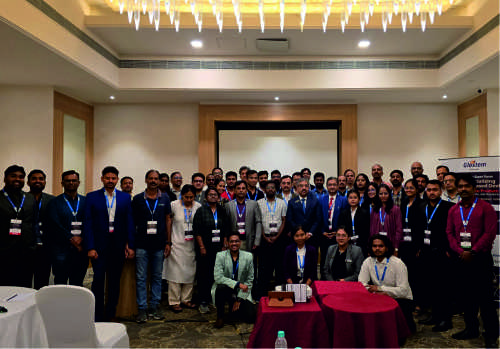
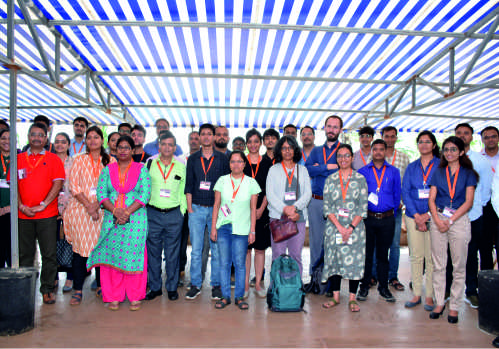
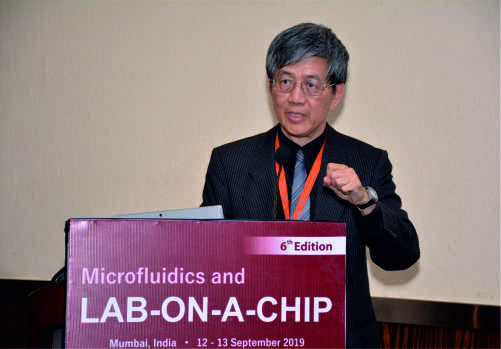
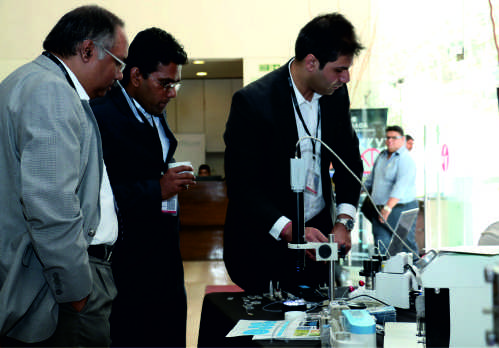
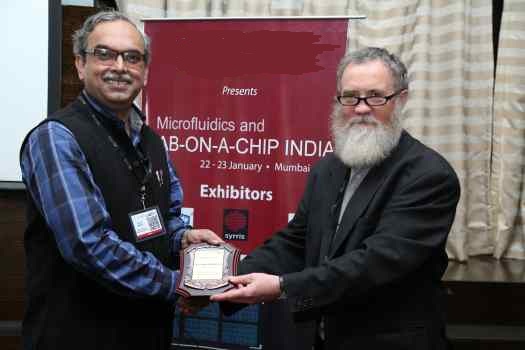
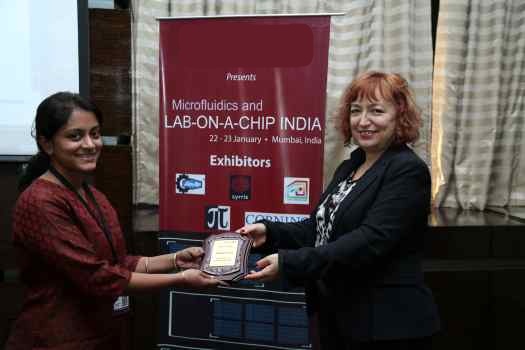
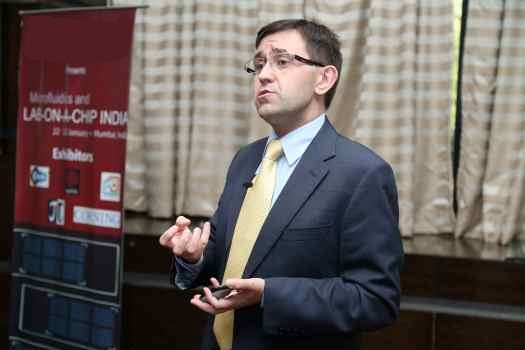
    Glimpses of the Previous Event
    Conference Officials
    Sanjay Bajaj

    Convenor

    Email: s.bajaj@glostem.com

    Mob.: +91-7696525050

    Farheen Zainab

    Organizing Secretary

    Email: f.zainab@glostem.com

    Mob.: +91-7696425050

    Swati Kanwar

    Organizing Secretary

    Email: s.kanwar@glostem.com

    Mob.: +91-8289015050

    Prabhjot Kaur

    Manager

    Email: prabhjot@glostem.com

    Mob.: +91-8283815050

    WhatsApp: 9041725050

    Upcoming Conferences

    AI, and ML in Pharmaceutical R&D and Manufacturing Workflows
    30 Apr - 1 May, 2026

    Microfluidics and Lab-on-a-Chip (MLC26)

    Details
    AI, and ML in Pharmaceutical R&D and Manufacturing Workflows
    14 - 15 May, 2026

    CPEIS-2026

    Details
    AI, and ML in Pharmaceutical R&D and Manufacturing Workflows
    11 - 12 Jun, 2026

    Cinnamon Seminar

    Details
    AI, and ML in Pharmaceutical R&D and Manufacturing Workflows
    10 Jul, 2026

    Catalyst & Solvent Strategies

    Details
    AI, and ML in Pharmaceutical R&D and Manufacturing Workflows
    10 - 11 Sep, 2026

    Flow Chemistry India 2026 (FCI26)

    Details
    Chief Guest
    Shantanu Bhattacharya

    Shantanu Bhattacharya's Biography

    Shantanu Bhattacharya

    Director

    CSIR-Central Scientific Instruments Organisation

    Prof. Shantanu Bhattacharya is GVMM chair and Professor of Mechanical Engineering at Indian Institute of Technology Kanpur. He has served IIT Kanpur for around 18+ years since 2007 during which he was Head of Design interdisciplinary program between 2017-2020. Prior to this, he completed his Master of Sciences degree in Mechanical Engineering from the Texas Tech University, Lubbock, Texas, and a Ph.D. in Bioengineering from the University of Missouri, Columbia, USA. He had a postdoctoral stint at the Birck Nanotechnology Center at the Purdue University.

    Prof. Bhattacharya also served Suzuki Motors for nearly 6 years after his B. Tech. and before going for higher education.

    His main research interests have been design and development of micro and nano sensors and actuation platforms, Fabrication technologies at various scales, functional material technologies and various applications, product design and development, Innovation technology management etc.

    Dr. Bhattacharya has guided around 22 Ph.D. students and more than 30 master’s students and has authored around 120 peer reviewed international journal papers, 06 US granted patents, 15 Indian patents, 14 edited research monologues, and many conference proceedings.

    In his 18+ years of research career of IIT Kanpur Dr. Bhattacharya has created a strong research program in the domain of biomedical sensors, functional materials and micro/nano manufacturing executing around 24 thematic research projects as a Principle Investigator valued about 17 crores with funding partners like DST, DBT, BIRAC, ISRO, ADA, Boeing, Victoria Innovation Council, Australia, Indo US Science and Technology forum etc. He has also served in capacity as council member of Indo-German Science and Technology Council, DST Task Force on Water Treatment Initiative, Modernization Board Member of Artificial Limb Manufacturing company, a mini navratna enterprise under the Ministry of Social Justice, which caters to the disability sector in the country etc. Dr. Bhattacharya currently serves as a member of the national expert panel of the methane monitoring and mitigation technologies and science and heritage research initiative of the department of science and technology. He also serves as a member of the Board of Governors of Panjab Engineering College and also a research and advisory council member of the Institute of Nanoscience and Technology. Prof. Bhattacharya is also a BOG nominee in the senate of ABV-IITM Gwalior and serves as a board member of the Academy of Council of Science and Industrial Research (AcSIR). He is also member of the advisory board of CSIR-URDIP.

    He has served as the principle subject matter expert of the Swayamprabha Mechanical Engineering Channel of the Ministry or education and has himself taught almost 200+ Lecture hours in Youtube for subjects related to manufacturing processes, Manufacturing systems, Sensor and Fabrication Technologies, Design practice etc. under the National Program of Technology Enhanced Learning (NPTEL), a ministry of education initiative. Dr. Bhattacharya has many awards and accolades to his credit, which includes the Young Engineers Award from the Institute of Engineers, Young Scientist Award of the Institute for Smart Structures and System, the Best Mechanical engineering design award from the National Design Research Forum, Institution of Engineers of India, Fellowship of the royal society of Chemistry, UK, Senior Membership of IEEE, Fellowship of the Institution of Engineers (India) and Institution of Electronics and Telecommunication Engineering (IETE), respectively.

    He has also won the NASI Reliance Platinum Jubilee Award from the National Academy of Sciences, Dr. R.S. Khandpur Award of IETE, Engineer M.P. Baya National Award of the Institution of Engineers India, and Abdul Kalam Technological Innovation National fellowship from the Indian National Academy of Engineering. Prof. Shantanu Bhattacharya has also won the Navayug Ratna Award which is a very prestigious award of the Navyug School system which  was founded in 1973 by New Delhi Municipal Council (NDMC) under the auspices of Navyug School Education Society.


    Director,  CSIR-Central Scientific Instruments Organisation,
    India

    Speakers & Panelists

    Paul Watts

    Paul Watts's Biography

    Paul Watts

    Research Chair in Microfluidic Bio/Chemical Processing

    Nelson Mandela University

    Prof Paul Watts started his career as a lecturer at the University of Hull in 2002, being promoted to full professor in 2011. At the University of Hull he led the micro reactor and flow technology group. In February 2013, he moved to Nelson Mandela University to hold the distinguished position of ‘Research Chair in Microfluidic Bio/Chemical Processing’. He has published of over 120 highly cited papers. He strongly believes that scientists should conduct research that impacts society; the biggest project underway involves the local production of key drugs as the morbidity and mortality from major diseases are much more devastating in Africa than in other regions of the world.  The vision is that new technology will be used within South Africa to manufacture generic drugs; this could create jobs and a new manufacturing industry within the country. 


    Research Chair in Microfluidic Bio/Chemical Processing,  Nelson Mandela University,
    South Africa

    Amit Asthana

    Amit Asthana's Biography

    Amit Asthana

    Professor and Head, Pharmaceutical Analysis

    NIPER Hyderabad

    Dr. Amit Asthana is working as Professor and Head of the Department of Pharmaceutical Analysis at the National Institute of Pharmaceutical Education and Research (NIPER), an autonomous institute of national importance under the aegis of the Department of Pharmaceuticals, Ministry of Chemicals & Fertilizers, Government of India, New Delhi. Before joining the current position, Dr. Asthana served as Associate Professor and founder of the Department of Medical Devices. He established the entire department from scratch and headed it for nearly 5 years. 

    Before joining NIPER, he worked for ~10 years as a Senior Principal Scientist, Principal Scientist, and Ramalingaswami Fellow at the Centre for Cellular and Molecular Biology (CSIR-CCMB), Hyderabad, India. He obtained his Ph.D. in Chemistry from Barkatullah University, India, while working at the Advanced Materials and Processes Research Institute (CSIR-AMPRI).

    Dr. Asthana has 26 years of postdoctoral experience in biomaterials, micro/nanotechnology, microfluidic device design, fabrication, and characterization, hot embossing, cleanroom operations, and paper microfluidics. He has worked at Institutes and Universities of International fame, such as the University of Amsterdam, The Netherlands; the Institute Curie, France; the University of Illinois at Urbana-Champaign, USA; Chungnam National University, South Korea; and the University of Queensland, Australia.

    Dr. Asthana is a Fellow of the Telangana Academy of Sciences and has received several prestigious fellowships, including SRF (CSIR, India), Curie Fellowship (France), Brainpool Fellowship (KRF, South Korea), and the Ramalingaswami Return Fellowship from DBT, India. He has published extensively in high-impact international journals and conferences and is an inventor on multiple Indian and PCT patents, with five granted and 13 filed. His team has done two technology transfers to Innovolution Pvt Ltd and to BabyQue Pvt Ltd. 

    His research interests include biomaterials, drug delivery, micro/nanofabrication, micro/nanofluidics, digital microfluidics, a wide range of microfluidic tools for biological studies, including diagnostic applications using paper microfluidics, and non-conventional methods for fabricating microfluidic devices. Recently, Dr. Asthana received a prestigious “Fast Track Translational” research project of CSIR to develop affordable paper-based pregnancy kits for livestock, which will be introduced in the market soon.  Further, one of his students has recently initiated a startup called AfforDxTx Pvt. Ltds, dedicated to creating diabetic wound healing patches. Dr. Asthana is associated with several start-ups in India working on affordable diagnostic and medical devices as a scientific advisor, including FastSense Diagnostics (Pune, India) and Microfluidic Paper Medical Devices Pvt. Ltd (Hyderabad, India), Theronosis Life Science Pvt. Ltd. (Hyderabad, India), Technical Advisor and Stockholder in Axio Biosolutions, Pvt. Ltd (Bangalore, India).  


    Professor and Head, Pharmaceutical Analysis,  NIPER Hyderabad,
    India

    Harald Denz

    Harald Denz's Biography

    Harald Denz

    Owner and CEO

    DENZ BIO-Medical GmbH

    With over 30 years of engineering expertise owner and CEO Harald Denz is supporting more than 200 satisfied customers over the last five years. With his interdisciplinary team of engineers, chemists and biologists he promotes affordable high quality prototyping and mass production for your project idea or a future product.


    Owner and CEO,  DENZ BIO-Medical GmbH,
    Austria

    Gary Tarver

    Gary Tarver's Biography

    Gary Tarver

    Site Head

    Chemveda Life Sciences

    Dr. Gary Tarver completed his PhD in synthetic chemistry in 1997 working under Varinder K. Aggarwal. Over a 28 year career he has worked in large pharma, CROs and academia, leading teams in diverse areas including plate based chemistry, technology development, reaction optimisation, late stage functionalisation, biotransformation, flow, process, scale up and medicinal chemistry. Most recently Dr. Tarver has joined Chemveda Life Sciences as Site Head in Dundee, Scotland, UK.


    Site Head,  Chemveda Life Sciences,
    United Kingdom

    Cloudius Ray Sagandira

    Cloudius Ray Sagandira's Biography

    Cloudius Ray Sagandira

    Principal Researcher

    Council for Scientific and Industrial Research

    Dr. Cloudius Ray Sagandira is a Principal Researcher at South Africa’s Council for Scientific and Industrial Research (CSIR) and an AfOx Visiting Researcher at the University of Oxford. His work focuses on integrating microfluidic and continuous flow technologies with data driven optimisation to enable scalable and sustainable manufacturing of active pharmaceutical ingredients (APIs). Trained across academia and industry at Nelson Mandela University, Chimie ParisTech, University of Basel, Novartis, and DiverChim, he has developed continuous flow processes for over 15 APIs, resulting in multiple high impact publications and patents. Passionate about strengthening pharmaceutical manufacturing in low-and middle-income countries, his research advances resilient and locally rooted solutions that improve access to essential medicines.


    Principal Researcher,  Council for Scientific and Industrial Research,
    South Africa

    Ashis Kumar Sen

    Ashis Kumar Sen's Biography

    Ashis Kumar Sen

    Professor, Mechanical Engineering

    Indian Institute of Technology Madras

    Dr. Ashis K. Sen is a Professor of Mechanical Engineering at IIT Madras, specializing in micro/nanofluidics, droplet microfluidics, and acoustofluidics. He earned his BE from NIT Rourkela, ME from IISc Bangalore, and PhD from USC Columbia, and has held positions at the University of Southampton, TU Darmstadt, and OIST Japan. He has published over 150 journal papers, holds multiple patents, and has supervised 25 graduate scholars. He is a recipient of several prestigious awards, including the Vasvik Awards 2026, IITM Research Awards 2021, and Swarnajayanti Fellowship 2018.  He is a Fellow of the Institute of Physics and the Royal Society of Chemistry, and serves in leading editorial and international scientific roles.


    Professor, Mechanical Engineering,  Indian Institute of Technology Madras,
    India

    Amit Agrawal

    Amit Agrawal's Biography

    Amit Agrawal

    Professor, Mechanical Engineering

    Indian Institute of Technology Bombay

    Prof. Amit Agrawal joined the Indian Institute of Technology (IIT) Bombay in 2004 after BTech from IIT Kanpur and PhD from University of Delaware, USA. He is currently an Institute Chair Professor and J.C. Bose National Fellow in the Department of Mechanical Engineering, and a former Dean (International Relations), IIT Bombay. His research interests are in the Development of novel bio-microdevices, Micro-scale flows, Theoretical fluid mechanics, and Turbulent flows. He has supervised 100+ students (including 40+ PhDs), and mentored 15 postdocs on these and related topics. He has published more than 300 journal articles and has a dozen granted patents with his students. He has authored a well-received book entitled Microscale Flow and Heat Transfer: Mathematical Modelling and Flow Physics. The work from his lab has appeared regularly on the cover page of prestigious journals such as Journal of Fluid Mechanics, Physics of Fluids and Langmuir, and widely covered in national and international media. He has served as the Editor-in-Chief of two journals: Sadhana and Transactions of Indian National Academy of Engineering, and has been Editor of several international journals. He is an elected Fellow of all the National Engineering and Science Academies of the country (INAE, NASI, IASc, INSA). He serves as President of National Society of Fluid Mechanics and Fluid Power and was the Vice President (Publications) of Indian National Academy of Engineering. He has been interviewed by All India Radio, Cooling India magazine, and some web-series.  He also features in a book for kids ‘They Made What? They Found What?’. He has been recognized by IIT Kanpur as a Distinguished Alumnus and awarded the country’s highest scientific honor – the Shanti Swarup Bhatnagar Prize for his seminal contributions.


    Professor, Mechanical Engineering,  Indian Institute of Technology Bombay,
    India

    Dhananjay Bodas

    Dhananjay Bodas's Biography

    Dhananjay Bodas

    Scientist - F, Nanobioscience Group

    MACS - Agharkar Research Institute

    Dhananjay Bodas is a seasoned research scientist with extensive expertise in microfabrication, microfluidics, biosensing, and nanotechnology. Currently serving as Scientist (Sc. F) at the Agharkar Research Institute (ARI), Pune, he is actively engaged in advanced research on organ-on-a-chip systems and cancer diagnostics. With over 15 years of experience, he has led and contributed to multiple high-impact, funded projects focused on rapid diagnostics, microchip-based detection systems, and nanoparticle synthesis. Dr. Bodas has played a key role as Principal and Co-Investigator in projects supported by premier agencies such as SERB, DST, ICMR, and DBT, addressing critical challenges in healthcare, including infectious diseases and oncology. His work reflects a strong blend of scientific innovation and translational research.

    He holds a Ph.D. in Electronic Science from the University of Pune and has also contributed to academia as a visiting faculty member, mentoring students in instrumentation science and technology development.


    Scientist - F, Nanobioscience Group,  MACS - Agharkar Research Institute,
    India

    Naresh Kumar Mani

    Naresh Kumar Mani's Biography

    Naresh Kumar Mani

    Professor, Biotechnology

    Manipal Academy of Higher Education, Manipal

    Dr. Naresh Kumar Mani is a Professor in the Department of Biotechnology at the Manipal Academy of Higher Education (MAHE), Manipal, India, within the School of Civil and Chemical Engineering. His research focuses on microfluidics, biosensors, and frugal diagnostic technologies for applications in healthcare, food safety, and environmental monitoring. He leads the Microfluidics, Sensors and Diagnostics (µSenD) Laboratory and is actively involved in interdisciplinary research aimed at developing low-cost, portable analytical devices for resource-limited settings.
    Dr. Mani completed his B.Tech in Biotechnology from Anna University, India. He subsequently earned an Erasmus Mundus Master’s degree in Nano-Biophotonics, studying at institutions including École Normale Supérieure Paris-Saclay, France, and the University of Wroclaw, Poland. He obtained his PhD in Microfluidics and Nanotechnology from Sorbonne University and École Normale Supérieure, France, where his research focused on single-molecule studies and light-controlled DNA conformational dynamics. 
    Dr. Mani has authored 45+ peer-reviewed publications in reputed international journals and has filed multiple patents related to biosensing and diagnostic technologies. His research has attracted competitive funding from agencies such as DST-SERB, VGST, and industry partners, supporting the development of innovative analytical platforms. He has received several prestigious scholarships and fellowships, including the Erasmus Mundus Scholarship, French Ministry Fellowship, Sakura Fellowship, Science Academies Fellowship, and INSA Fellowship. In addition to research and teaching, he actively mentors students, collaborates with national and international research groups, and serves as a reviewer for several leading scientific journals.


    Professor, Biotechnology,  Manipal Academy of Higher Education, Manipal,
    India

    Siddhartha Panda

    Siddhartha Panda's Biography

    Siddhartha Panda

    Professor, Chemical Engineering

    Indian Institute of Technology Kanpur

    Dr. Siddhartha Panda is a Professor of Chemical Engineering, and a participating faculty in the Materials Science Programme, and is the Coordinator (i.e. Head) of the National Centre for Flexible Electronics (NCFlexE), at IIT Kanpur. His research focuses on chemical sensors for various applications (including healthcare) and the accompanying transport, reactions, transductions, materials processing, and intelligence -- utilizing flexible printable platforms. Several of the technologies developed by his group at IIT Kanpur have been licensed to the industry. Prior to joining IIT Kanpur in 2006, he was a Staff/Advisory Engineer at the IBM Semiconductor R&D Center, New York, for over six years. He obtained a Ph.D. from the University of Houston in 1999, an M.S. from the University of Cincinnati in 1995 and a B.Tech. from IIT Kharagpur in 1992, all in Chemical Engineering.


    Professor, Chemical Engineering,  Indian Institute of Technology Kanpur,
    India

    Satish Kumar Dubey

    Satish Kumar Dubey's Biography

    Satish Kumar Dubey

    Associate Professor, Mechanical Engineering

    BITS Pilani, Hyderabad

    Prof. Satish Kumar Dubey is an Associate Professor in the Department of Mechanical Engineering and Head of the state-of-the-art Clean Room: Micro Nano Fabrication Facility at BITS Pilani, Hyderabad Campus. He is also the Principal Investigator of the MEMS Micro and Nano Electronics (MMNE) Laboratory at BITS Pilani, Hyderabad. He holds a B.E. in Mechanical Engineering from Pt. Ravi Shankar Shukla University, an M.Tech. in Thermal Engineering from Maulana Azad National Institute of Technology, Bhopal and a Ph.D. from BITS Pilani. His research interests include heat transfer modelling, microfluidics, MEMS sensors, and energy harvesting systems. Prof. Dubey has completed nine sponsored research projects funded by agencies such as DRDO, DST, SERB, and NSM, and is currently leading ten ongoing projects supported by government bodies and industries. He has authored over 120 journal papers, 40+ conference papers, and filed 32 Indian patents and 01US patent. He has delivered more than 30 invited talks across academia and industry. He currently supervises 14 Ph.D. scholars, with 07 having graduated. Additionally, he has organized. numerous technical workshops and seminars. Prof. Dubey is Co-founder and Director of Cleome Innovations Pvt. Ltd. BIRAC BIG Grant awardee start-up and Director and Scientific Advisor to Sensome Innovations Pvt. Ltd., a DPIIT-recognized start up and DST- NIDHI awardee.


    Associate Professor, Mechanical Engineering,  BITS Pilani, Hyderabad,
    India

    Tarun Kanti Bhattacharyya

    Tarun Kanti Bhattacharyya's Biography

    Tarun Kanti Bhattacharyya

    Institute Chair Professor

    Indian Institute of Technology Kharagpur

    Prof. Tarun Kanti Bhattacharyya is an Institute Chair Professor at the Indian Institute of Technology Kharagpur and a nationally and internationally respected leader in electronics, nanoelectronics, MEMS, VLSI, and sensor systems, with over 35 years of academic, research, and industrial experience spanning government laboratories, industry R&D, and premier academic institutions.

    At IIT Kharagpur, he has held several strategic leadership positions, including Professor & Head, Department of Electronics and Electrical Communication Engineering, Professor & Head, Advanced Technology Development Centre, Professor-in-Charge of the High-Performance Device Laboratory, Professor-in-Charge of the Microelectronics and MEMS Laboratory, and National Coordinator of the National MEMS Design Centre. He has been instrumental in establishing and strengthening world-class research infrastructure, including state-of-the-art VLSI and MEMS laboratories and an advanced VLSI test facility developed in collaboration with Keysight Technologies, enabling industry-grade chip, MEMS, and system validation.

    His research spans MEMS and microsystems, RF and analog VLSI, nanoelectronics, thin-film devices, nano-biosensors, and energy systems, with a strong emphasis on device-to-system translation and technology transfer. He has led and coordinated multiple multidisciplinary research groups, covering VLSI, nanobio systems, high-performance semiconductor devices (including MBE-based platforms), and MEMS-based aerospace sensors and actuators.

    Prof. Bhattacharyya has authored more than 300 peer-reviewed journal publications (conference papers intentionally excluded) and holds 17 patents (granted and filed), reflecting sustained contributions across semiconductor device physics, MEMS design, nano-biosensing, RFICs, and energy devices. His work has enabled impactful technologies in healthcare diagnostics, precision drug delivery, environmental monitoring, space micro-propulsion, and sustainable energy storage.

    He has made exceptional contributions to research mentoring, having successfully supervised 26 Ph.D. scholars and 45 M.S. (by Research) students. His students’ work has received national-level doctoral thesis awards and has translated into careers in leading academic institutions, national laboratories, multinational R&D organizations, and deep-tech startups.

    His contributions have been recognized through several prestigious honors, including the IBM Faculty Award (2012); the DST–Lockheed Martin India Innovation Growth Programme Gold Medal (2016) for microfluidic drug-delivery technology; INAE and ISSS doctoral thesis awards; and the Gandhian Young Technological Innovation (GYTI) Award for nano-engineered MEMS technologies for space applications. He has also been selected for elite international programs such as the Indo-US Frontiers of Engineering, Indo-Japan Advanced Micro/Nano Manufacturing Initiative, and the Indo-US Centre for Advanced and Futuristic Manufacturing, and is a recipient of the UNIDO (Vienna) Fellowship for international research collaboration.

    Through sustained leadership in research, infrastructure creation, international collaboration, mentoring, and translational innovation, Prof. Bhattacharyya continues to play a pivotal role in advancing India’s ecosystem in semiconductors, MEMS, nanoelectronics, and deep-tech system development.


    Institute Chair Professor,  Indian Institute of Technology Kharagpur,
    India

    Chirasree Roy Chaudhuri

    Chirasree Roy Chaudhuri's Biography

    Chirasree Roy Chaudhuri

    Associate Dean, Consultancy Professor

    Indian Institute of Engineering Science and Technology, Shibpur

    Prof. Chirasree Roy Chaudhuri is a senior member of IEEE and NASI (National Academy of Science, India). Currently she is working as a Professor of Electronics and Telecommunication Engineering at Indian Institute of Engineering Science and Technology, Shibpur, and also associated with Center for Healthcare Science and Technology. Her fields of interest include Biological and Chemical sensors and signal processing for healthcare. She has published over 100 papers in different international journals and conference proceedings, written seven book chapters, has three patents in the area of nanobioensors and systems. She has received the women excellence award by DST-SERB and has been featured in the book “Women in STEM: Vanguards of India@75” by Confederation of Indian Industries (CII) in 2022. Her research group has been awarded Gandhian Young Technological Innovation (GYTI) under SRISTI ((Society for Research and Initiatives for Sustainable Technologies and Institutions), India.


    Associate Dean, Consultancy Professor,  Indian Institute of Engineering Science and Technology, Shibpur,
    India

    Bhanu Prakash

    Bhanu Prakash's Biography

    Bhanu Prakash

    Scientist E (Associate Professor) & Group Leader, Microfluidics Research Laboratory

    Institute of Nano Science & Technology

    Heading the microfluidics research laboratory at INST, Dr. Bhanu Prakash completed his bachelor degree in Physics from Hans Raj College of Delhi University. He pursued his master degree from IIT Kanpur. Later, he finished his PhD from Panjab University. Currently he is serving as a Scientist ‘E’ (Associate Professor) at INST Mohali. He is a member of Indian National Young Academy of Science and currently serving as a role of academic editor in the journal PLoS One. His research interest is in the area of experimental microfluidic devices for various applications under the broad umbrella of nanoscience and nanotechnology. In their pursuit of excellence, Dr. Prakash's group leverages microfluidic device simulation using COMSOL and, more recently, the application of AI/ML techniques, further enhancing their capabilities and pushing the boundaries of microfluidic research.


    Scientist E (Associate Professor) & Group Leader, Microfluidics Research Laboratory,  Institute of Nano Science & Technology,
    India

    Suman Singh

    Suman Singh's Biography

    Suman Singh

    Scientist-F

    CSIR-Central Scientific Instruments Organisation

    Dr. Suman Singh is a distinguished Scientist at the Central Scientific Instruments Organisation (CSIR-CSIO), Chandigarh, and Professor and Coordinator at the Academy of Scientific and Innovative Research (AcSIR), Ghaziabad, Faculty Advisor, International Student Chapter of the American Chemical Society (ACS) at CSIR-CSIO, and Advisor to the Indian Women in 3D Printing Society, Bangalore.

    With over two decades of research experience as a Materials Chemist, Dr. Singh specializes in advanced functional materials for energy, sensing and diagnostic applications, involving 3D printing and microfluidics. Her prolific contributions span high-impact publications, conference proceedings, book chapters, edited volumes, patents, copyrights, design registrations, and successful technology transfers. 

    Dr. Singh’s dedication to scientific advancement and societal impact has been honoured through accolades such as the Envirocare Green Award 2024 and ESDA Women Empowerment Award 2023, member of the National Academy of Science (NASI), Physical Science, and featured as one of “75 Women in Chemistry” in book ‘She Is’, published by Beyond Black in collaboration with the Principal Scientific Adviser, Government of India, and the Royal Society of Chemistry, Executive member of NASI-Chandigarh Chapter, Among top 2% Scientists Worldwide for 2021, 2022, and 2024, 2025, and as one of the top 2% most influential Indian scientists for 2022. Dr. Singh is an active member of esteemed organizations such as the Materials Research Society of India, Semiconductor Society of India, Vijnana Bharati, among others and editor, Journal Chemical Physics Impact & Materials Today Chemistry (Elsevier), Scientific Reports (Nature Publisher), and as Guest Editor for special issues for the Royal Society of Chemistry.


    Scientist-F,  CSIR-Central Scientific Instruments Organisation,
    India

    Ragavendran Sivakumarasamy

    Ragavendran Sivakumarasamy's Biography

    Ragavendran Sivakumarasamy

    CEO & Founder

    Point-of-Care Microfluidics Private Limited

    Dr. Ragavendran Sivakumarasamy is a microfluidics and semiconductor process engineer with over a decade of experience in cleanroom fabrication, nano-device integration, and advanced biosensor platform development. He is the Founder and CEO of Point-of-Care Microfluidics Pvt. Ltd., where he leads the design and development of scalable lab-on-chip systems and point-of-care diagnostic technologies for biomedical and healthcare applications, with a focus on translating research innovations into deployable solutions.

    He obtained his Ph.D. in Micro and Nanotechnology from CNRS–University of Lille, France, and has conducted advanced research at internationally renowned institutions, including CNRS (France), IMEC (Belgium), and the University of Hasselt. His research expertise encompasses PDMS-based microfluidics, nanotransistor biosensors, and nanofluidic systems, with a strong emphasis on integrating microfluidics with semiconductor technologies and enabling scalable manufacturing.

    Dr. Ragavendran has published in leading journals such as Nature Materials and Nano Letters, contributing significantly to advancements in nanoscale biosensing and lab-on-chip integration. His work includes the development of highly sensitive, membrane-free ion detection systems and precision nanofabrication techniques.

    Currently, his efforts are focused on developing cost-effective, highperformance diagnostic platforms and supporting deep-tech innovation through end-to-end product development, from concept and prototyping to validation and commercialization, thereby enabling accessible and sustainable healthcare solutions.


    CEO & Founder,  Point-of-Care Microfluidics Private Limited,
    India

    Manjunath Siddaramaiah

    Manjunath Siddaramaiah's Biography

    Manjunath Siddaramaiah

    Diagnostics and Genomics Senior FAS - APAC

    Cytiva

    Dr. Manjunath S is a distinguished scientist and expert in diagnostic kit development, cell therapy, and medical device innovation, with over 12 years of experience spanning industry, academia, and hospital-based research. He has played a pivotal role in driving business and technical advancements in the Asia-Pacific region, offering expertise in rapid POCT (Point-of-Care Testing) diagnostics, magnetic bead-based assays, and molecular diagnostics.

    Currently serving as a Senior Field Application Specialist at Cytiva, he has collaborated with over 40 industries to develop Lateral Flow Assays (LFA), RT-PCR kits, and immunoassays. His contributions include the patented development of a Magnetic Bead-based Autologous Cell Therapy Kit for Male Infertility (US20180072987A1) and multiple innovations in Flow Cytometry, ELISA, and Mass Spectrometry-based applications.

    Dr. Manjunath holds a Ph.D. in Biophysics and Fluorescence Spectroscopy from Manipal University and has been recognized with numerous fellowships and innovation awards. His research has led to several international publications and patents, contributing significantly to advancements in protein characterization and clinical diagnostics.

    Apart from his scientific endeavors, he is an Adjunct Faculty at Manipal University, actively guiding Ph.D. scholars in rapid diagnostic device development.


    Diagnostics and Genomics Senior FAS - APAC,  Cytiva,
    India

    Amit Bhat

    Amit Bhat's Biography

    Amit Bhat

    Business Development Manager

    Molecular Devices

    Amit Bhat is a Business Development Manager in Molecular Devices with over 10 years of expertize in molecular diagnostics, cell biology and high content imaging. He has worked in R & D, where he was actively associated with new protocol development, testing and regulatory submissions. He has supported many academic institutes, CROs and Biopharmas to develop, optimise and release their protocols in his role as an application scientist. Amit will be sharing information about Drug Discovery in 3D Biology.


    Business Development Manager,  Molecular Devices,
    India

    Devendra Rawat

    Devendra Rawat's Biography

    Devendra Rawat

    National Sales Manager

    SIMCO Global Technology & Systems


    National Sales Manager,  SIMCO Global Technology & Systems,
    India

    Conference Sponsors

    Technology Partner
    Point-of-Care Microfluidics
    Point-of-Care Microfluidics
    Visit Website
    Molecular Devices
    Molecular Devices
    Visit Website
    Cytiva
    Cytiva
    SIMCO Global Technology & Systems
    SIMCO Global Technology & Systems
    Visit Website

    Point-of-Care Microfluidics

    Point-of-Care Microfluidics

    Visit Website


    Molecular Devices

    Molecular Devices

    Visit Website


    Cytiva

    Cytiva


    SIMCO Global Technology & Systems

    SIMCO Global Technology & Systems

    Visit Website


    Microfluidics and Lab-on-a-Chip (MLC26)

    Download Programme PDF
    Thursday, 30th April 2026
    14:00
    Inauguration
    14:05

    Welcome Address

    Sanjay Bajaj,  CEO & MD,  Glostem Private Limited,  India

    14:10

    Address by the Chief Guest

    Shantanu Bhattacharya,  Director,  CSIR-Central Scientific Instruments Organisation,  India

    14:20
    Session 1: FOUNDATIONS OF MICRO & NANOFLUIDICS: ENGINEERING & SCALABLE FABRICATION TECHNOLOGIES
    14:25

    Integrated Lab-on-Chip Architectures for Point-of-Care Bio and Environmental Sensing

    Satish Kumar Dubey,  Associate Professor, Mechanical Engineering,  BITS Pilani, Hyderabad,  India

    14:45

    Next-Gen Materials and Processes for Fabrication of Microfluidics-based Devices

    Harald Denz,  Owner and CEO,  DENZ BIO-Medical GmbH,  Austria

    15:05

    Translating Electronic Field Effect Transistors from Lab to Practice

    Chirasree Roy Chaudhuri,  Associate Dean, Consultancy Professor,  Indian Institute of Engineering Science and Technology, Shibpur,  India

    15:25

    Development of Innovative Point-of-Care Microdevices

    Amit Agrawal,  Professor, Mechanical Engineering,  Indian Institute of Technology Bombay,  India

    15:45
    Session 2: FRONTIER CHEMISTRY: BIOORGANIC, MEDICINAL, AND SYNTHETIC CHEMISTRY USING MICROFLUIDICS
    15:50

    Microfluidic synthesis:-Application in Medicinal and Synthetic Chemistry

    Gary Tarver,  Site Head,  Chemveda Life Sciences,  United Kingdom

    16:10

    Microfluidics as a Scalable Strategy for Continuous-Flow Chemical Synthesis

    Paul Watts,  Research Chair in Microfluidic Bio/Chemical Processing,  Nelson Mandela University,  South Africa

    16:30

    Machine Learning Meets Microfluidics: Rapid Optimisation of Continuous-Flow API Synthesis

    Cloudius Ray Sagandira,  Principal Researcher,  Council for Scientific and Industrial Research,  South Africa

    16:50
    Session 3: THE MICROFLUIDICS INNOVATION ECOSYSTEM 1
    16:55

    High Content Screening in Microfluidic Devices

    Amit Bhat,  Business Development Manager,  Molecular Devices,  India

    17:10

    Microfluidic device fabrication using soft lithography

    Devendra Rawat,  National Sales Manager,  SIMCO Global Technology & Systems,  India

    17:25

    Digital Posters 1-10

    Friday, 1st May 2026
    14:00
    Session 4: DIAGNOSTICS, BIOSENSORS, AND BIOMEDICAL MICROFLUIDIC DEVICES
    14:05

    From Lab to Clinical Trial: Lateral Flow Prototyping for Childhood Diarrhea and Sepsis, and Modified Microfluidic Systems for Particle Engineering

    Amit Asthana,  Professor and Head, Pharmaceutical Analysis,  NIPER Hyderabad,  India

    14:25

    Designing wearable sweat sensors - bioinspired approaches

    Siddhartha Panda,  Professor, Chemical Engineering,  Indian Institute of Technology Kanpur,  India

    14:45

    Emerging Microfluidics: Applications in Energy and Healthcare

    Bhanu Prakash,  Scientist E (Associate Professor) & Group Leader, Microfluidics Research Laboratory,  Institute of Nano Science & Technology,  India

    15:05
    Session 5: PRECISION ANALYSIS USING MICROFLUIDICS: BIO-ANALYTICAL SYSTEMS & OMICS
    15:10

    Sensors & Remediation for Environment Monitoring; A step towards Sustainability

    Suman Singh,  Scientist-F,  CSIR-Central Scientific Instruments Organisation,  India

    15:30

    Frugal Microfluidics for Public Health: Rapid Detection of Ethanol Content and Food Adulterants

    Naresh Kumar Mani,  Professor, Biotechnology,  Manipal Academy of Higher Education, Manipal,  India

    15:50
    Session 6: DRUG DEVELOPMENT AND DEVELOPMENT OF DELIVERY SYSTEMS
    15:55

    Tuning microreactor synthesised quantum dots for targeted imaging and delivery

    Dhananjay Bodas,  Scientist,  MACS - Agharkar Research Institute,  India

    16:15

    Programmable ultrasonic fields enhances intracellular delivery in cell clusters

    Ashis Kumar Sen,  Professor, Mechanical Engineering,  Indian Institute of Technology Madras,  India

    16:35

    Design and Fabrication of Micro Array Batch for transdermal painless vaccine/drug delivery platform

    Tarun Kanti Bhattacharyya,  Institute Chair Professor,  Indian Institute of Technology Kharagpur,  India

    16:55
    Session 7: THE MICROFLUIDICS INNOVATION ECOSYSTEM 2
    17:00

    Bridging Engineering and Scalable Manufacturing of Micro- and Nanofluidic Systems for Advanced Biomedical Diagnostics

    Ragavendran Sivakumarasamy,  CEO & Founder,  Point-of-Care Microfluidics Private Limited,  India

    17:15

    Advance your Single cell Lab on Chip for successful omics application

    Manjunath Siddaramaiah,  Diagnostics and Genomics Senior FAS - APAC,  Cytiva,  India

    17:30

    Digital Posters 11-20

    18:25

    Closing Remarks

    Sanjay Bajaj,  CEO & MD,  Glostem Private Limited,  India

    Details

    Call for Abstracts

    The Organising Committee cordially invites researchers, industry scientists, and disruptive startups to submit their original work for the 7th Edition of Microfluidics and Lab-on-a-Chip India.

    As a premier forum with a six-year legacy of excellence, this edition focuses on the synergy between Fundamental Engineering and Commercial Translation. We invite submissions that push the boundaries of miniaturised systems, particularly those with applications in the pharmaceutical, clinical, and diagnostic sectors.


    Presentation Types

    Digital Poster Presentation: Poster presentation as a single slide or image with explanation for a maximum of 5 (4+1) minutes.

    Oral Presentation by Start-ups/Start-up Pitch: Short presentation for 10 (8+2) minutes showcasing the new technology developed by a start-up.

    Tech-talk: Technology presentations by industries developing microfluidics-based devices, showcasing their facilities and capabilities for 15 (12+3) minutes.


    Digital Poster Guidelines

    Digital Poster presentation is an online poster presentation and therefore should be presented as a single slide or image with an oral explanation for a maximum of 5 (4+1) minutes. The poster can be prepared in any program, but should be saved as a single A4 PDF file in portrait orientation only. This file should be submitted by April 28, 2026. The PDF files of all the presenters will be combined, and the presenter will not be required to share the screen. Each presenter is required to come live and start describing the presentation orally.


    Abstract Submission Guidelines

    Format: Plain text to be submitted online only on this page.

    Word Limit: Maximum 200 words (excluding title and author affiliations).

    Structure: Must include Objective, Methodology, Key Results, and Conclusion in a single paragraph.

    Originality: Submissions must represent original work done by the presenter individually or should be a part of the team.

    Abstract Submission Topics

    • Microfluidics-based Innovations from Academics
    • Microfluidics-based Innovations by Startup/Start-up Pitch
    • Industry Technology Presentation
    Submit Now

    Abstract Submission (* is a required field.)

    Name of Conference: Microfluidics and Lab-on-a-Chip (MLC26)

    Presenting Author

    Address

    Attachment

    Who Should Attend

    • Pharmaceutical & Biotech Industry Professionals
    • MedTech & Diagnostic Developers
    • Startup & Innovation Ecosystem Professionals
    • Environmental & Food Safety Experts
    • Academic Researchers & Research Scholars

    Payment by Wire Transfer/Against PO/GST Invoice

    If you wish to pay by direct bank transfer by NEFT/RTGS or you want to pay against a GST invoice, please contact our Support Team by email at s.kanwar@glostem.com/f.zainab@glostem.com or call 8289015050/7696425050.

    If you wish to receive a GST invoice, please share your company's GST certificate at the time of registration only.

    Registration

    Register Now
    Category Currency Base Fee GST / Tax % Total (incl.)
    Students and Research Scholars
    INR ₹1,250.00 18% ₹1,475.00
    Digital Poster Presenter
    INR ₹1,500.00 18% ₹1,770.00
    Startup Delegate
    INR ₹2,000.00 18% ₹2,360.00
    Faculty Delegate
    INR ₹2,500.00 18% ₹2,950.00
    Startup Technology Presenter
    INR ₹4,000.00 18% ₹4,720.00
    Industry Delegate
    INR ₹4,500.00 18% ₹5,310.00
    Technology Industry Delegate
    INR ₹6,500.00 18% ₹7,670.00
    Industry Tech-talk Package
    INR ₹15,000.00 18% ₹17,700.00
    Payment Modes
    • Manual: Cheque / NEFT / RTGS (confirmation number required)
    • Razorpay: UPI, NetBanking, Credit/Debit Cards (INR)
    • ICICI Payment Gateway (as enabled)
    A formal Tax Invoice will be issued later via our accounting system.
    Registration Inclusions
    • Access to all conference sessions
    • Certificate of participation
    Industry Tech-talk Package

    The package includes: One Technology Presenter Pass, One Delegate Pass and logo display on the event banner, promotional materials and agenda.

    Proceed to Registration

    Menu

    • Home
    • About Us
    • Company Profile
    • Contact Us

    Contact Us

    Unit 21, Level 2, Berkeley Square, Plot No 24, Industrial & Business Park, Phase I, Chandigarh 160002, India

    events@glostem.in

    +91 172 5025050, 9041725050

    • Privacy Policy
    • Terms & Conditions
    • Cancellation & Refund Policy
    © Copyright 2025 Glostem Private Limited. All rights reserved.
    Site Created & Maintained by Digilinkers